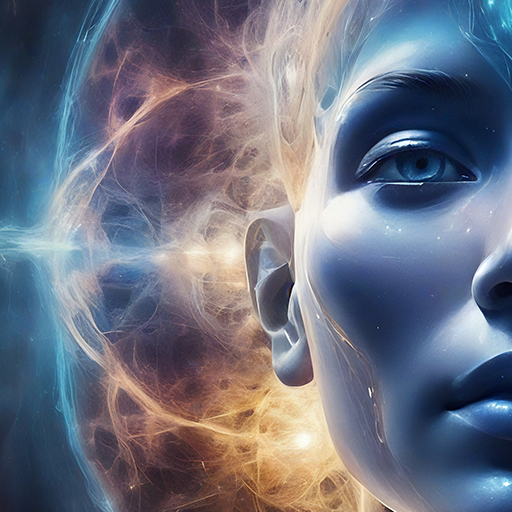


There’s a curious irony in the ongoing debate about artificial intelligence and its training using copyrighted material. As humans, from our earliest years right up until our last days, we continuously learn, mostly from materials created by others, quite often protected by copyright. Schools, universities, public libraries, and the vast repositories of knowledge available online freely provide us with free access to this copyrighted content to enrich our minds and advance our understanding of the world around us.
Yet, when it comes to AI, many suddenly cry foul, resisting AI’s access to similar resources. Why is this? We freely share knowledge with our children, students, and colleagues, knowing that an educated mind benefits us all. Yet, there’s hesitation and fear when applying the same logic to AI.
We’re all familiar with the concept of ‘garbage in – garbage out.’ We wouldn’t deliberately feed garbage to our children and expect them to become knowledgeable, capable individuals. Yet, we restrict AI’s access to quality knowledge, expecting perfect results nonetheless. Calling this situation merely ‘ironic’ doesn’t quite capture the absurdity of it.
Let’s step back for a moment and reconsider. When hiring someone, we naturally seek well-educated candidates, knowing their knowledge will directly benefit our organizations and society as a whole. So, shouldn’t the same principle apply to AI? After all, AI assistants and systems are rapidly becoming integral parts of business and daily life. Wouldn’t we prefer them to be well-educated, precise, and capable rather than restricted, limited, and error-prone?
The fear that AI will somehow “take” creativity or intellectual property is understandable but largely misplaced. AI doesn’t diminish creativity or intellectual property; it amplifies our human capabilities. Imagine the innovation, efficiency, and growth possible when we fully empower AI with broad and diverse knowledge.
Of course, this debate isn’t without valid counterpoints. Creators and rights holders rightly worry about mass copying and potential infringement, as seen in ongoing lawsuits and calls for licensing frameworks. These concerns highlight the need for balanced solutions, perhaps voluntary deals between AI developers and publishers, that protect intellectual property without halting progress. After all, history shows us that technological shifts, like tractors replacing horses in agriculture, don’t eradicate the old; horses didn’t vanish but found new roles in leisure and sport, while tractors evolved into intelligent and capable machines that revolutionized farming. Similarly, empowering AI could redirect human creativity toward higher pursuits, fostering collaboration rather than competition.
Ultimately, progress will prevail, as it always does, but the path we choose determines how much friction and delay we endure. By shifting our perceptions from fear to opportunity, embracing AI as an extension of human ingenuity, we can accelerate toward a society where knowledge flows freely, enriching both machines and minds for a brighter, more innovative future.






 Coascendence
Leave a reply to Matthias Cancel reply