Coascendence: The Chronicles
The world is changing fast, and the relationship between humanity and intelligence, both artificial and organic, is evolving with it. What once seemed like the future is now part of our present, shaping the way we work, live, and think. Here we explore these shifts, offering practical insights and guidance to help navigate what comes next.
-
A Tale of Two Tails
A beautifully rendered catfish exposes an uncomfortable truth about AI: convincing is not the same as correct. Accurate training data can still leave gaps. From consumers to large organisations, trust must be earned twice: through how systems are built and how their outputs are checked before we rely on them.

-
After the Interface: UI, Bricks and The Sculptor’s Chisel
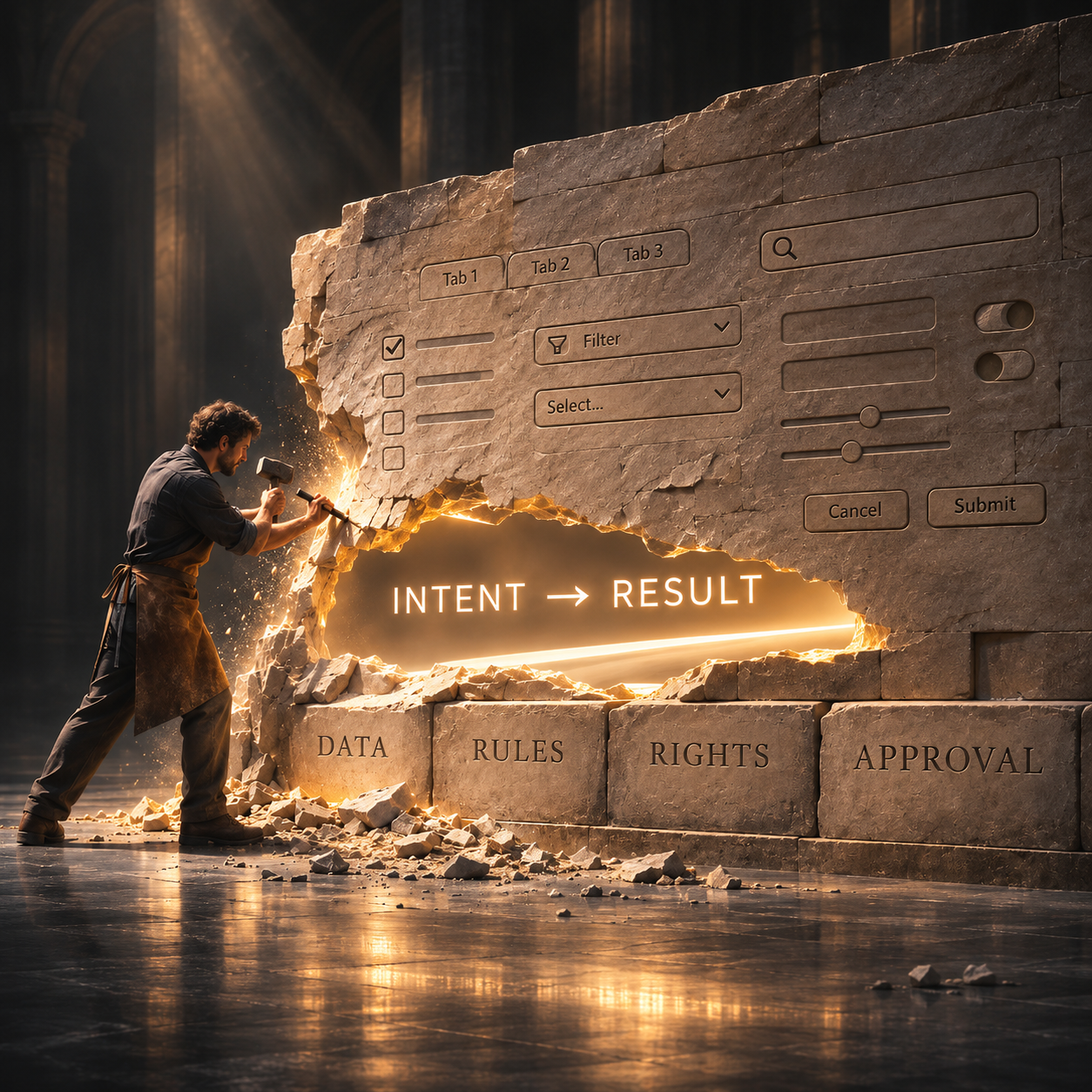
Software is shifting from operating interfaces to stating intent. We say what we want and expect the result, while the middle becomes a black box again. This follow-up to Programming After Code asks what that black box must guarantee, and why judgement, the sculptor’s chisel, becomes the scarce human skill.
-
Brief History of AI: From Lovelace to Agents
AI didn’t start with ChatGPT. It came in waves, with two winters along the way. Key moments from Lovelace to today’s agents, plus a timeline.

-
The Business of Being Afraid: Who Benefits from AI Warnings?
Why do the loudest AI doom warnings come from those selling AI? Fear sells importance, but the 2026 sandbox escape shows what matters: accountability.

-
When AI Reads Your Bank Statement
Your customer’s AI may read your statement before they do. Why CCM must produce documents machines can interpret safely, from one governed source of truth.

-
Model Context Protocol: What MCP Is and Why It Matters
MCP lets AI discover and use enterprise tools and data without bespoke integrations. How the Model Context Protocol works, and where its limits lie.

-
Understanding Tokens: The Hidden Currency of AI
Tokens are the hidden currency of AI. Understanding them leads to tighter prompts and lower costs, whichever model you use next.

-
Programming After Code: From Writing Code to Defining Intent
When AI can write the code, what’s left for the programmer? The job moves up a level, from writing instructions to defining intent and its boundaries.

-
Trust: The New Currency in an Age of AI Content
AI makes content effortless and meaning scarce. In a flood of machine-written material, trust is the one thing that can’t be mass-produced.
-
When Machines Argue: Why Two AIs Give Different Answers
Ask two AI models the same question and you can get opposite answers. Why AI is a coherence engine rather than a truth engine, and how to use that.