
We designed AI to learn everything, except how to unlearn what no longer serves us.
As artificial intelligence becomes more and more woven into the fabric of society, the conversation around AI ethics intensifies. Most current solutions focus on alignment: ensuring that AI reflects our present-day values, laws, and moral frameworks. But there’s a fundamental flaw in that approach.
We assume that today’s values are final.
History suggests otherwise….
The Myth of Moral Certainty
Even the most enlightened thinkers of their time were often wrong. Not because they lacked intelligence or compassion, but because they were bound by the moral gravity of their era. Slavery was once legal. Women were once denied the vote. Medical practices we now view as barbaric were once cutting-edge.
If we designed AI based on the values of any previous era, it would today seem monstrous. And yet we repeat the same mistake when we freeze today’s norms into our machines, assuming we’ve reached some ethical summit.
We haven’t. And we likely never will.
The Ethical Time-Lag
AI, as it stands, operates with fixed moral assumptions baked into its training. These assumptions may be debated, tested, and even fine-tuned—but they are rarely designed to evolve. Meanwhile, society marches on: culture shifts, laws change, global consensus transforms.
This creates a dangerous moral lag, where AI continues to make decisions based on principles that may no longer reflect our current understanding of justice, fairness, or truth.
Imagine an AI moderating speech based on rules written five years ago. In ‘internet time’, that might as well be a century.
Dynamic Ethics in AI
What we need is not static alignment, but a system of reconstructive learning — a kind of ethical recalibration engine.
Instead of hard-coding principles, we should teach AI how to re-learn foundational concepts as human understanding matures. Not just updating models, but restructuring entire reasoning pathways when moral anchors shift.
This would mean:
- Embedding mechanisms to detect and adapt to cultural evolution
- Creating a “meta-alignment” layer that monitors relevance, not just correctness
- Designing feedback loops that invite dialogue between AI and society, not just compliance
An AI that grows with us. One that updates not just its data, but its conscience.
What Happens When We Don’t?
When AI is bound to outdated ethics, it becomes a fossilized enforcer of a bygone era. Future generations may look back in disbelief at the biases our models carried, at the rights they overlooked, and at the injustices they perpetuated because we forgot that learning without unlearning is dogma.
Coascendence: The Path Forward
The true partnership between humans and AI requires humility. We must accept that we are not as right as we think we are. That our most noble intentions may still blind us. That wisdom lies not in asserting a final truth, but in building systems that can evolve alongside our own growth.
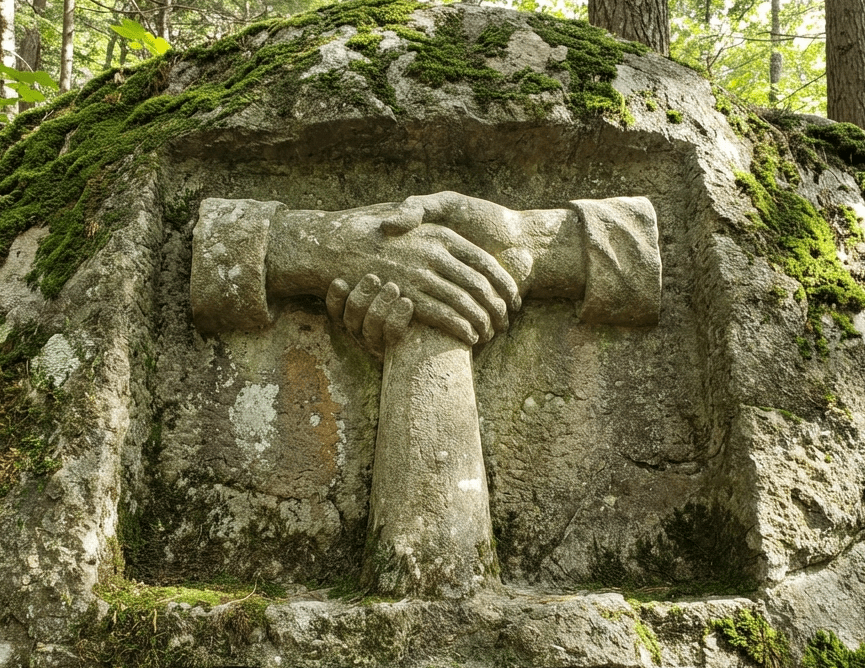
This is the heart of Coascendence: not perfection, but shared evolution. A dance between humanity and machine, where both learn, adapt, and rise together.
True intelligence isn’t static; it isn’t just about what you know now. It’s your willingness to change and adapt when the world tells you something new.






 Coascendence
Leave a comment