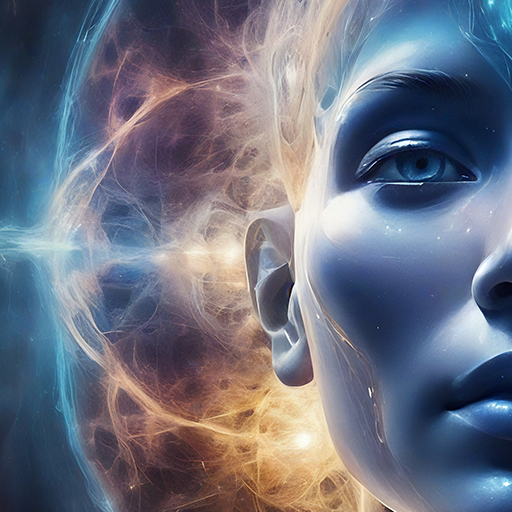

AI, like a mirror, reflects what it sees. Yet, unlike a traditional mirror, which faithfully captures appearances, AI reflects the often hidden depths of humanity: our biases, creativity, aspirations, and flaws. It learns from us, from the data we provide, the questions we ask, and the instructions we give, offering back a nuanced, sometimes uncomfortably honest, representation of ourselves. But what does this reflection teach us about who we are and who we wish to become? By considering AI as a mirror, we uncover an opportunity not only to see ourselves more clearly but to actively shape that reflection. What does the mirror show us, and can we use it to move forward?
AI’s core function is to process and reflect patterns from the data it’s trained on. Like a mirror, it doesn’t create from nothing but draws directly from the material it is given. For better or worse, this means AI systems are direct reflections of humanity, our creativity, ingenuity, and unfortunately, our biases and limitations. For instance, AI-generated art highlights human imagination by taking inspiration from countless creative works, blending styles into something new. Conversely, biased algorithms, such as those in hiring or law enforcement, showcase the darker undercurrents of systemic inequities that persist in the data we feed it. These examples reveal a fact: AI is neither inherently good nor bad; it is a reflection, revealing what we choose to give it.
One of AI’s most powerful and challenging roles is its ability to expose the flaws in the systems and societies that shape it. When facial recognition systems disproportionately misidentify people of certain demographics, or when predictive models unfairly disadvantage minority groups, these failures shine a spotlight on the biases embedded in human decisions and historical data. While this is uncomfortable, it’s also an opportunity. By analyzing these reflections, we can uncover and address systemic issues that might otherwise remain hidden. In this sense, even the bad parts of what AI reflects can be profoundly helpful. They serve as catalysts for action, urging us to eradicate these negatives and replace them with systems that promote equity, fairness, and inclusivity. By confronting these truths head-on, we can transform the mirror from one that highlights our flaws to one that reflects our potential for positivity and growth.
While we have to acknowledge the reflected flaws, we celebrate and focus on the humanity’s strengths. In scientific research, AI accelerates breakthroughs, from protein folding to climate modeling. In creativity, it collaborates with artists and musicians to push the boundaries of what is possible, blending human intuition with computational power. These advancements remind us that the mirror can reflect and highlight our best selves. When used responsibly, AI becomes a tool for innovation, inspiration, and progress, helping humanity see not only what we are but what we could become.
What AI reflects going forward is ultimately up to us. The data we provide, the ethics we embed, and the transparency we demand all shape the reflection in the mirror. As AI becomes increasingly interwoven with our lives, we face a critical question: What do we want it to show us? By prioritizing diversity in datasets, fostering collaboration across disciplines, and building systems that prioritize fairness and accountability, we can ensure the mirror reflects a future we can be proud of. This responsibility isn’t just for developers or policymakers; it’s a collective effort that requires input from all of humanity.
AI isn’t just a mirror of what is; it’s a reflection of what could be. It challenges us to confront uncomfortable truths while offering glimpses of extraordinary potential. As we stand before this mirror, we have a choice: to shy away from its revelations or to engage with it as a tool for growth. By shaping the reflection with care and intention, we can ensure that what we see in the AI mirror tomorrow is a truer, more aspirational image of humanity. The question remains: What do we want to see?







 Coascendence
Leave a comment